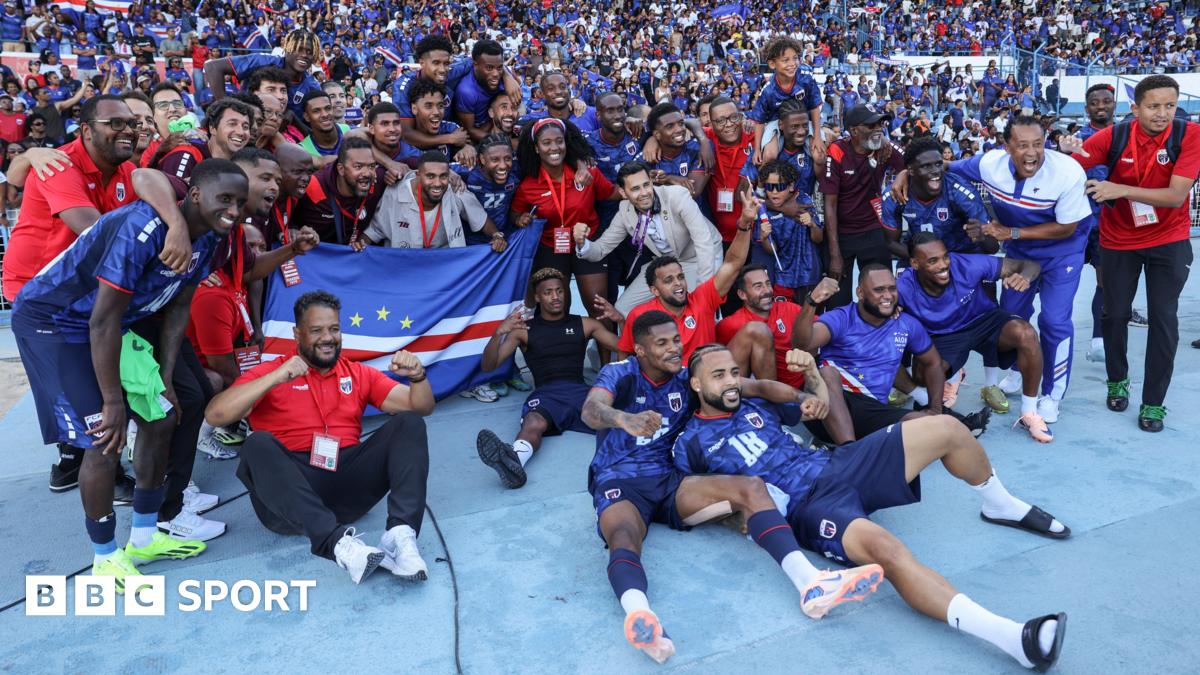
All of Cape Verde’s matches will also be covered live on the BBC Sport website and app with updates, analysis, and fan reaction. Come and be part of it!
Give me a fact to impress my friends
Veteran defender Stopira only came out of international retirement in October to provide injury cover for the must-win qualifier against Eswatini.
The 38-year-old netted Cape Verde’s decisive third goal just minutes after stepping off the bench and he’s since been named in their World Cup squad.
Now give me some proper detail
The arid west African archipelago comprises of 10 volcanic islands in the Atlantic Ocean and with a population of little more than 500,000 people, they are the third smallest nation to reach this stage.
“Size defines nothing in football,” says Cape Verde’s charismatic head coach Bubista, who doesn’t believe his country’s diminutive stature is cause for concern.
The foundation for their steady progress is the country’s widespread diaspora and their football federation has spent years scouting and recruiting foreign-born talent.
Migration from the islands in the 1960s and 1970s – prior to the nation gaining independence from Portugal in 1975 – created Cape Verdean communities around the globe.
More than 50% of their World Cup squad hail from these enclaves and they have selected players from France, the Netherlands, Portugal, and the Republic of Ireland.
“Everybody wants to play for Cape Verde now,” says the national technical director.
The island nation secured its first Olympic medal in Paris two years ago, when boxer Daniel Varela de Pina won men’s flyweight bronze. The country’s footballers have already surpassed that achievement by reaching the World Cup and they have a puncher’s chance of making further sporting history this summer.